APIs and automation
Webhooks or Polling for Detecting File Changes: How to Choose
Compare notifications and periodic queries to choose a change-detection strategy that fits your latency, workload, and recovery needs.
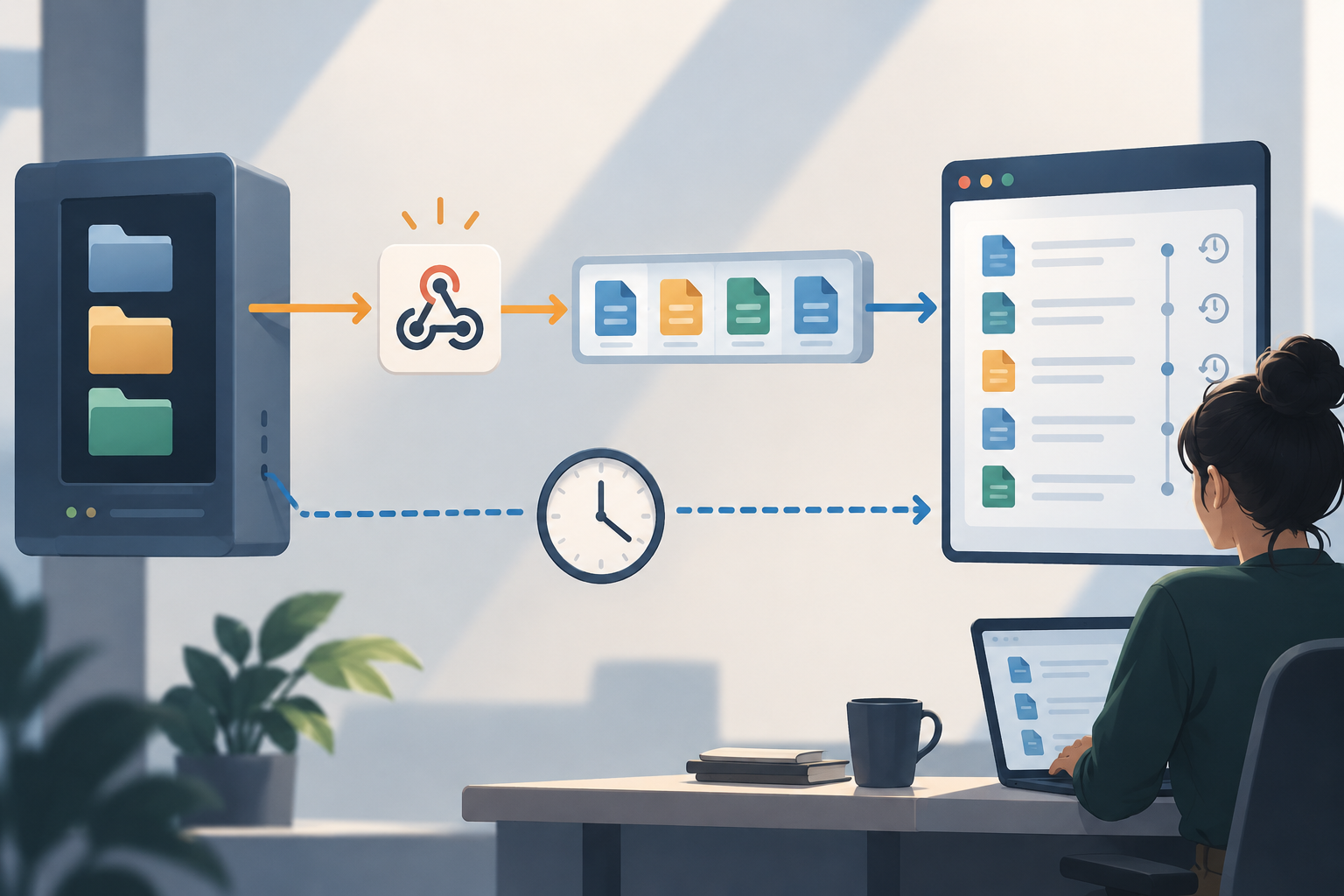
What It Means to Detect Changes with Webhooks or Polling
An integration that needs to react when a file changes has to learn that a change occurred and decide what to do next. With webhooks, a service sends a notification to a receiving URL. With polling, the client application queries an API at intervals to check for changes. Neither pattern completes the workflow on its own: the application still needs to identify the affected item, retrieve any necessary state, and process the result.
Choose a pattern based on the process, not a universal preference. A status view may tolerate a delay and suit periodic queries. A workflow that should start soon after a change may benefit from a notification, if the service provides an appropriate event. First define what counts as a change: a new version, a metadata update, an upload, or another update relevant to the application.
- Define the change that should trigger an action and the maximum acceptable delay.
- Treat detection, retrieving the current state, and processing the file as separate steps.

Webhooks: Prompt Notifications Require Careful Processing
A webhook can avoid repeated queries when nothing has changed. It is a useful option when the API provides the event you need and your application can receive inbound requests. A notification is a signal to act, not necessarily the file itself or a guarantee that processing will happen exactly once. The application may need to query for current state before completing the work.
As a general design practice, validate and record each notification, then respond promptly. Delegate time-consuming work to a queue or asynchronous worker where appropriate. Also plan for duplicate and out-of-order notifications: make processing idempotent where possible and use identifiers, version markers, or timestamps to decide whether an update is current, if the API provides them.
- Confirm that the service provides the event you need and understand how its webhook requests are authenticated.
- Record notifications and delegate heavy processing so the receiver can respond promptly.
- Plan for duplicates and out-of-order events without assuming the API provides version markers or timestamps.

Polling: Balance Detection Delay and Query Work
Polling is a query initiated by your application. It checks for changes and compares the response with the state already processed. The consumer controls when to query, which can suit a process that tolerates delays or cannot receive inbound requests. The trade-off is that some queries may find nothing new, while longer intervals increase the time before a change is detected.
Set the interval according to the acceptable delay, the number of items, and the API's documented limits. Keep a checkpoint for the last successfully completed synchronization and advance it only after the cycle completes. Monitoring delays and failed calls can help reveal problems.
- Choose an interval that fits the acceptable delay and the API's documented limits.
- Monitor synchronization delays, errors, and the time of the last successful cycle.
- Update the checkpoint only when the synchronization cycle has completed successfully.
Compare Latency, Workload, Complexity, and Recovery
Use the same criteria to assess both patterns. A webhook may start work sooner when the service emits a relevant notification and the receiver is available. Polling may be simpler when delays are acceptable or inbound requests are not practical. Its workload depends on query frequency and the number of items being checked.
Consider how the process will recover after an interruption. A webhook-based design needs a plan for notifications received during an outage. A polling design can recover only changes the API makes discoverable afterward. Check the service's primary API documentation for its supported events, queries, and recovery behavior; do not assume missed events can always be reconstructed.
- Consider webhooks when low latency matters and a relevant event is available.
- Consider polling when inbound requests are not practical or the process tolerates a delay.
- Compare documented recovery options before choosing how to resume after an interruption.
Example: Updating an Application's Status When a File Changes
Imagine an internal application that shows whether a Cloud document is pending, reviewed, or transformed. Define which change affects the status and what action follows, such as retrieving metadata and updating the document record. Apification supports integrations through REST APIs, OpenAPI, and webhooks, including signed webhooks with retries, history, and statistics. These capabilities do not establish that a particular event exists for every file change.
If the applicable API documents a suitable event, the receiver can record the notification as pending work and retrieve the necessary state before updating the record. Otherwise, a periodic process can review the relevant items and record which synchronization completed. In either design, use documented identifiers and guard against duplicate effects, such as creating the same task twice. Cloud lets users review item history, download previous versions, and restore content; integration access depends on the relevant API capabilities.
When to Combine Notifications and Verification Queries
A hybrid pattern can use a webhook to start work and a periodic query to check the application's state against the file's state. The scheduled review may reveal discrepancies, but it is not automatically a complete recovery mechanism; that depends on what changes the API lets you find.
Use this approach only when the service documents both a relevant notification and a suitable query. If only one mechanism is available, design around that mechanism rather than assuming the other exists.
- Use both mechanisms only when the API documents them and they serve distinct purposes.
- Define what discrepancy the review should detect and what action should follow.
What to Check in the Primary API Documentation
Before implementation, consult the primary API or OpenAPI documentation for the service involved. For webhooks, check which events are available, what the message contains, how requests are authenticated, and what delivery, retry, or ordering behavior is documented. For polling, identify the relevant query and its filters, limits, and any documented cursor or continuation mechanism.
Apification supports REST APIs, OpenAPI, and webhooks. Its integration capabilities include signed webhooks with retries, history, and statistics, but those general capabilities do not identify a specific file-change event or query. Confirm the exact event, endpoint, and recovery options for the service you plan to use.
- Check the available events, message format, and documented webhook authentication and delivery behavior.
- Identify the query endpoint, filters, and limits relevant to the changes you need to detect.
- Confirm which continuation and recovery mechanisms the service documents.
Test Failure Cases Before Production
Do not assume a short interruption requires no action or that a webhook provides a particular detection time. Record processing results and enough context to investigate errors. Decide what status users should see when the application cannot retrieve the file's current state.
Test the workflow with real changes and controlled failures in an environment appropriate for the API. Check what happens when the receiver is slow, a query fails, or processing is interrupted. For polling, verify that an incomplete cycle does not advance the checkpoint. Document how to resume from the last correct state.
- Test receiver outages, failed queries, and process resumption.
- Verify that the application shows a clear status when it cannot retrieve the file.
- Decide who will review delayed synchronizations and how they will investigate them.
Frequently asked questions
Do webhooks guarantee that each file change is processed only once?
Do not assume so. Check the service's documented guarantees and design processing to tolerate duplicate notifications.
What polling interval is appropriate?
Choose an interval based on the acceptable delay, the number of items, and the API's documented limits.
Does Apification offer webhooks for every file change?
Apification supports webhooks, but that does not confirm an event for every type of file change. Check the primary API documentation for the specific event.
When should you combine webhooks and polling?
Combine them when the API documents both mechanisms and a query can verify state or reveal discrepancies.
Sources and further reading
Documentation consulted while preparing this article.
Explore Apification
Related articles
APIs and automation
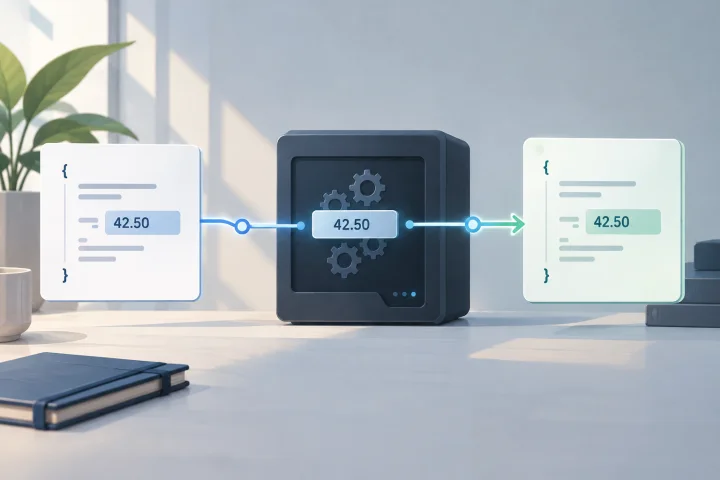
Decimal Differences in an API: How to Investigate Them Without Changing the Contract
A value-tracing example and two documented cases can help locate precision differences without assuming a cause or changing the contract.
APIs and automation
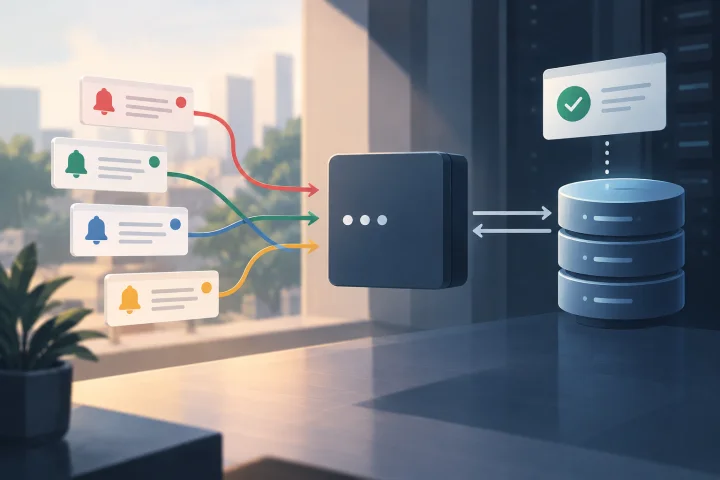
Out-of-Order Webhooks: How to Stop an Old Event from Reverting a File’s State
Receipt time does not prove which change happened first. Learn to review the webhook contract and reconcile file state using verifiable criteria.
APIs and automation
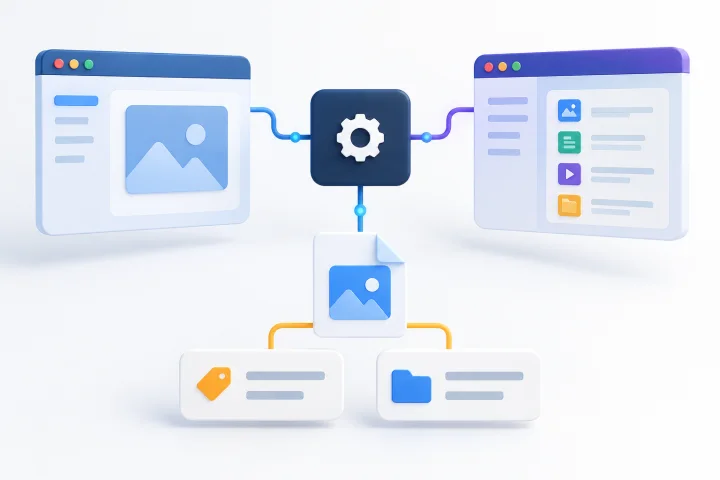
How to Identify Files in an API Without Relying on Names or Paths That May Change
Design references that are less dependent on renames and moves: review the OpenAPI contract, save mappings, and test cases that could break synchronization.